Product Manager, Frontend Engineer, Backend Engineer, Creative Director
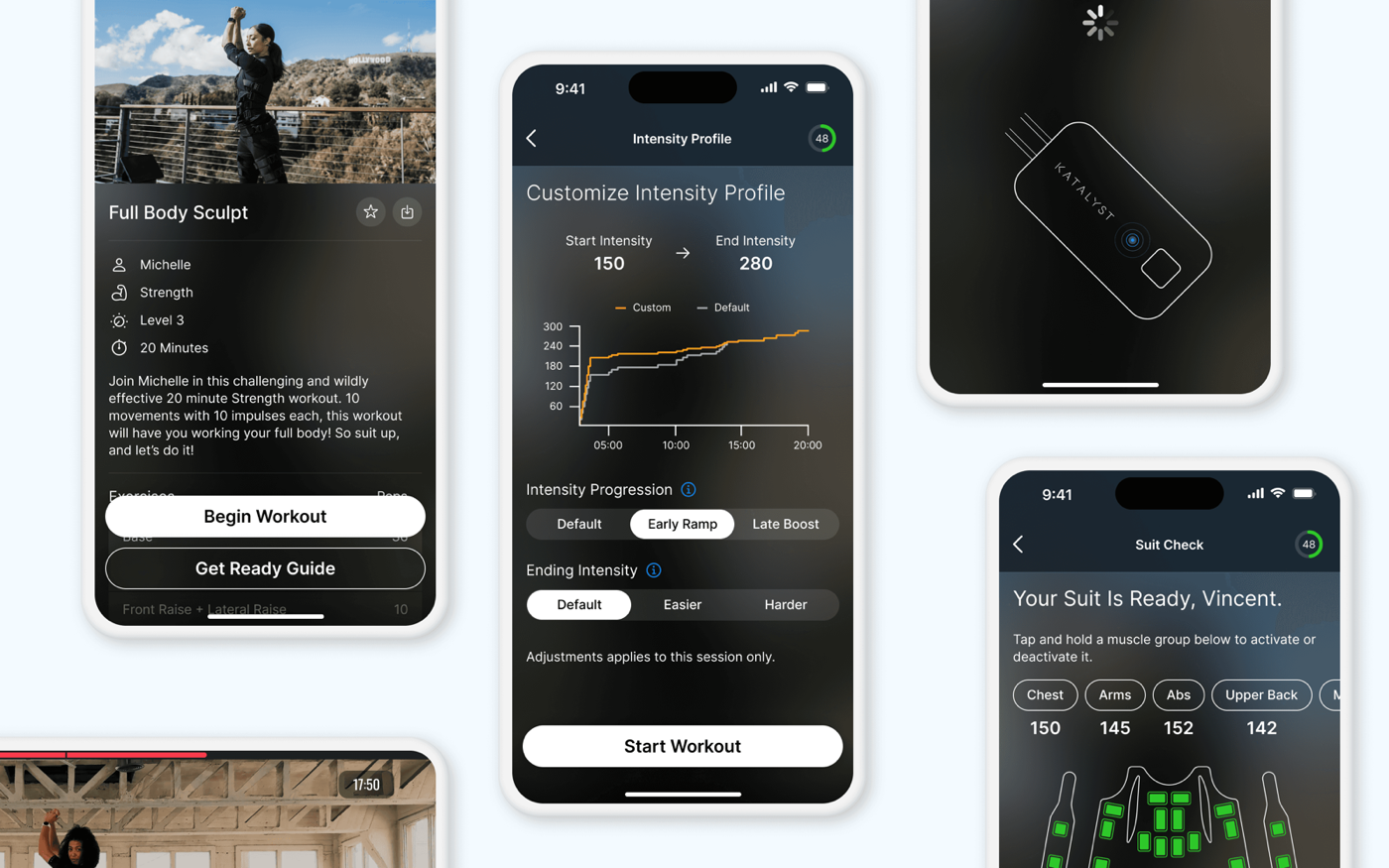
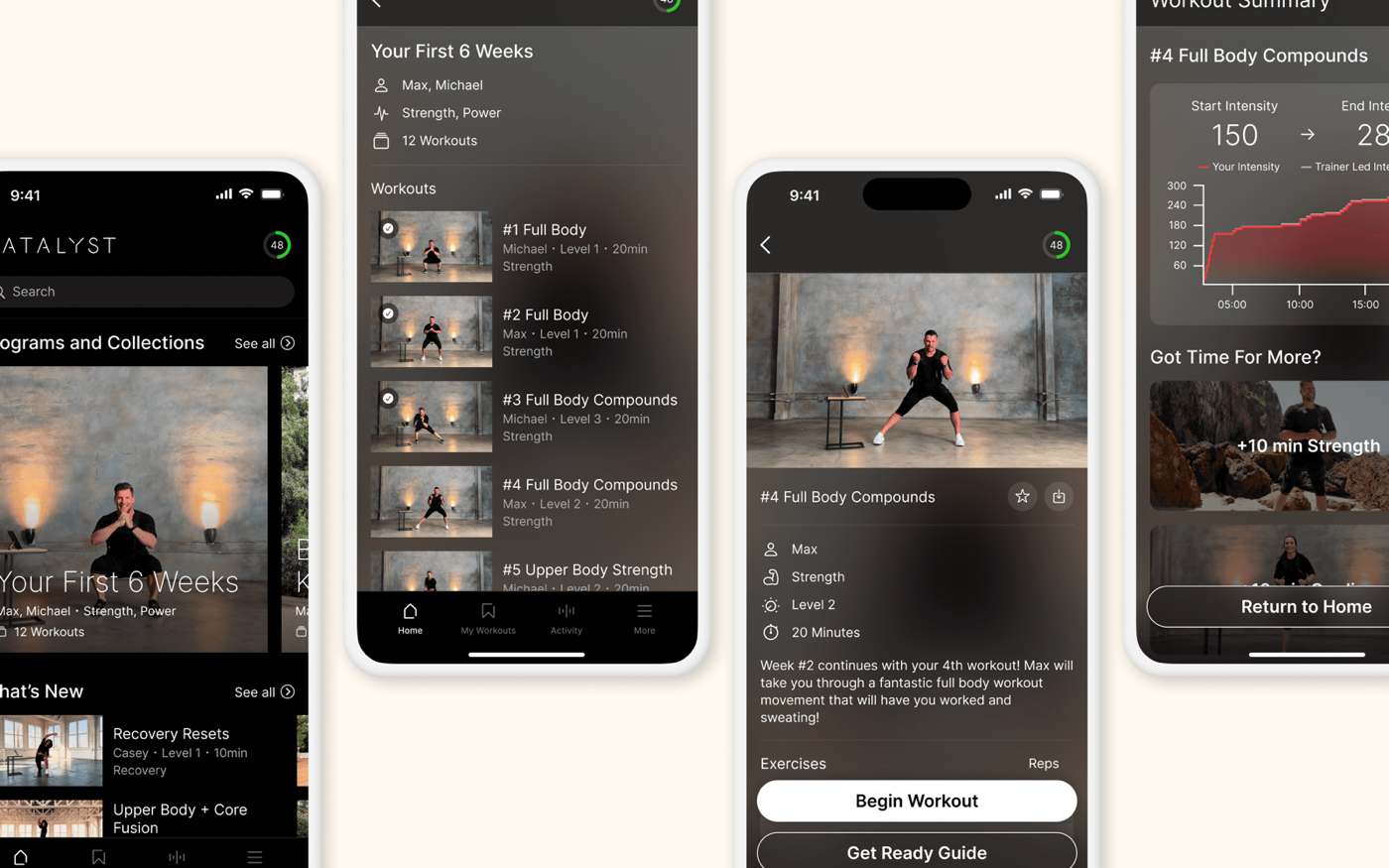
I created a pre-workout setup and an in-workout adjustment system that gave users predictable, safe, and personalized intensity control during at-home EMS training. The solution reduced discomfort, improved trust, and kept trainer-programmed workouts flowing without disruption.
01
Problem & context
Katalyst’s EMS training sessions rely on electrical impulses tailored to each user. At home, without an EMS technician present, users had limited control over intensity progression, and trainer-programmed changes could feel abrupt or unpredictable, leading to anxiety, skipped adjustments, and reduced confidence.
Users expressed uncertainty around safety and comfort at higher intensities, which we validated through post-workout surveys and interviews. The goal was to empower users to train independently while preserving the flow of trainer-designed workouts.
02
The challenge
How might we make home EMS workouts safer and more personalized without breaking workout flow?
03
My responsibilities
I led the end-to-end UX process, including:
▪Leading UX strategy and design for pre-workout and in-workout control experiences
▪Turning user and trainer feedback into actionable design requirements
▪Collaborating with engineering to stay within firmware limits
▪Validating designs through usability testing with active members
04
Research & insights
I combined:
▪Usage analytics to understand when and how often users adjusted intensities
▪User interviews & surveys on recorded-workout pain points
▪Trainer interviews to understand how intensity profiles are programmed
▪A/B testing on intensity profiles to measure perceived safety and usability
▪Usability testing with different profile configurations
Key insights:
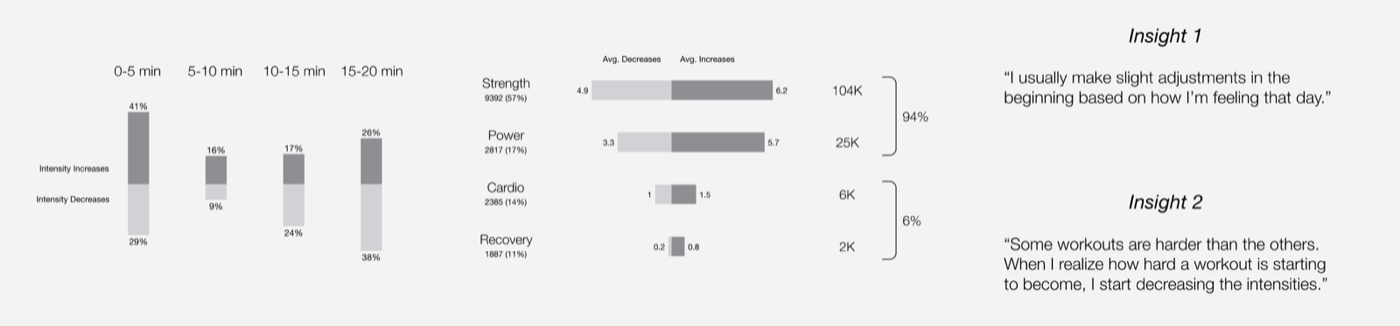
▪Mixpanel data showed that 43% of sessions included mid-workout adjustments, mostly in Strength and Power workouts. Intensity increases clustered early and intensity decreases clustered late.
▪Interviews showed users adjusted early to gauge how they felt and adjusted late when workouts became harder than expected. Many unfollowed trainer-led increases when ramps felt abrupt.
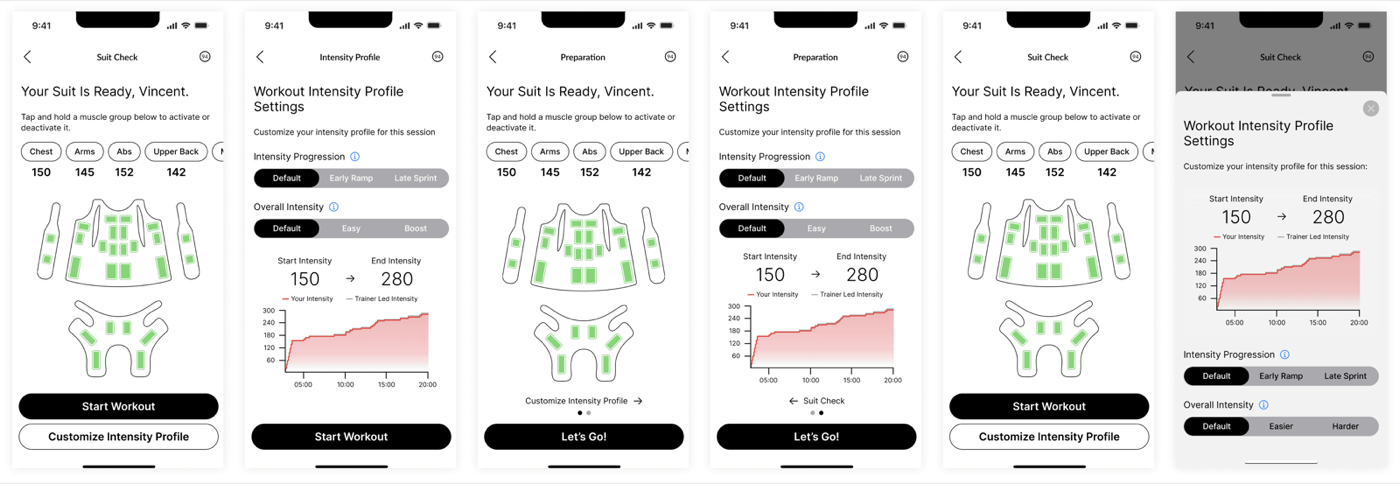
▪Usability tests confirmed the need for smoother intensity changes and clearer expectations before starting.
▪Overall takeaway: users needed predictability, transparency, and control before the workout began.
05
Strategy & prioritization
We focused on two high-impact opportunities:
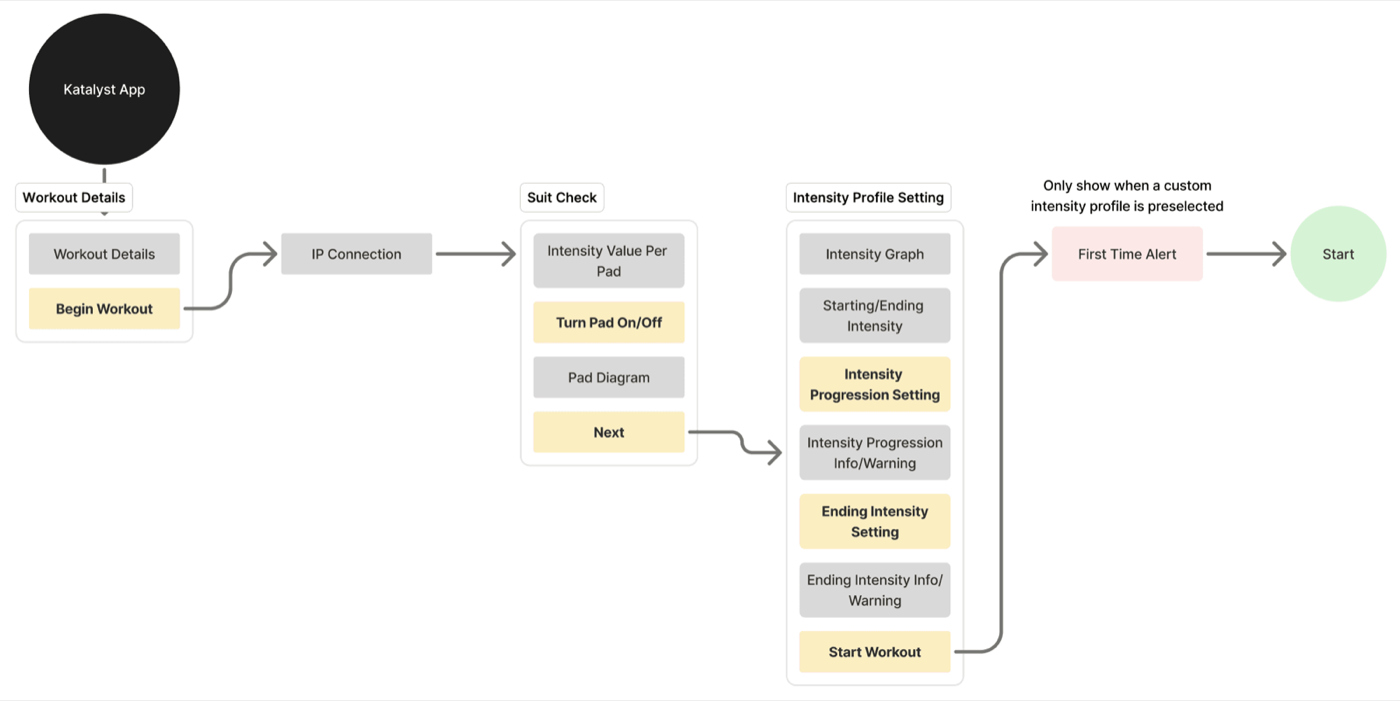
▪Choose Before You Train: Let users select their preferred intensity progression before starting, reducing disruptive mid-workout changes.
▪Smooth & Visible Changes: Show upcoming intensity adjustments and apply them gradually for predictability and safety.
Constraints:
Built fully within existing firmware. Launched in 3 months without costly hardware changes.
06
Design solutions
1. Pre-Workout Intensity Profiles
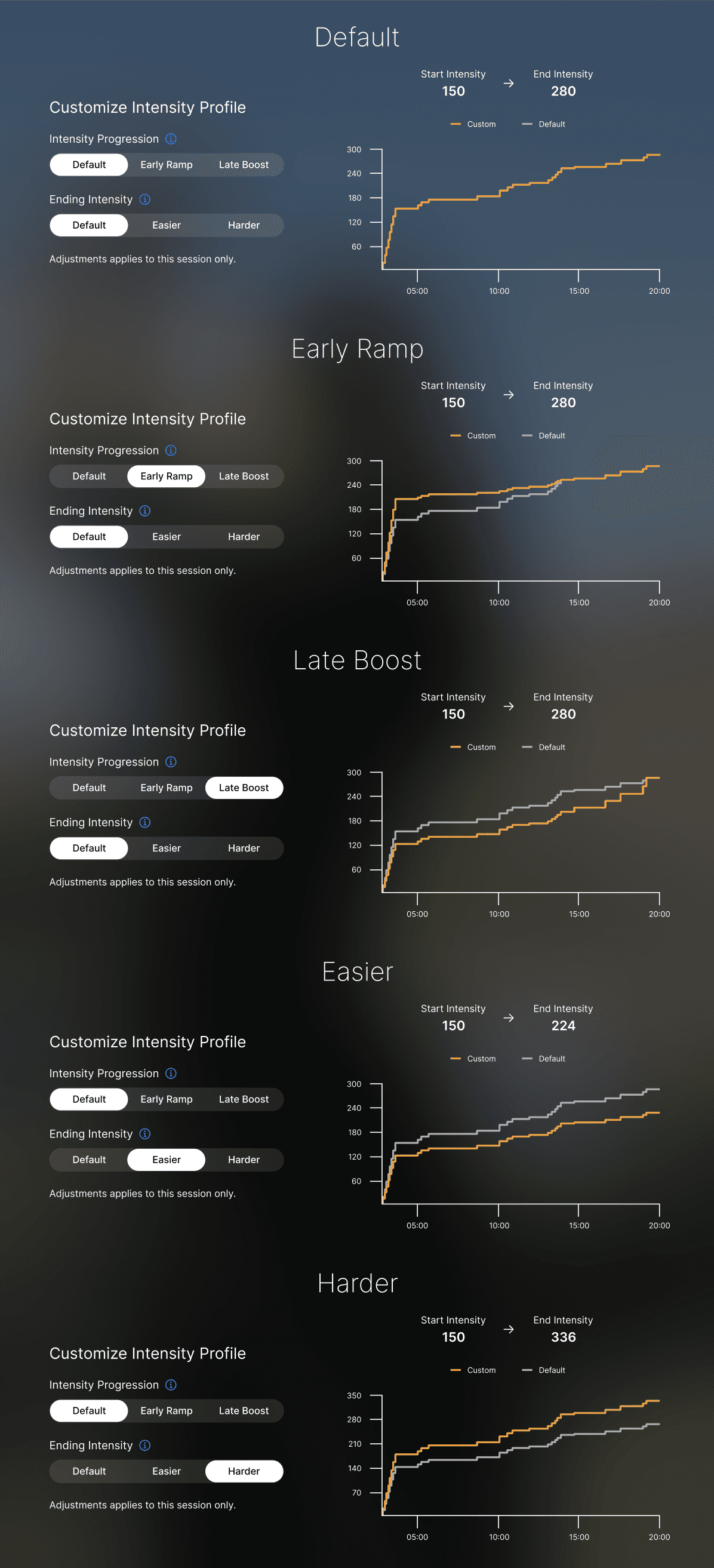
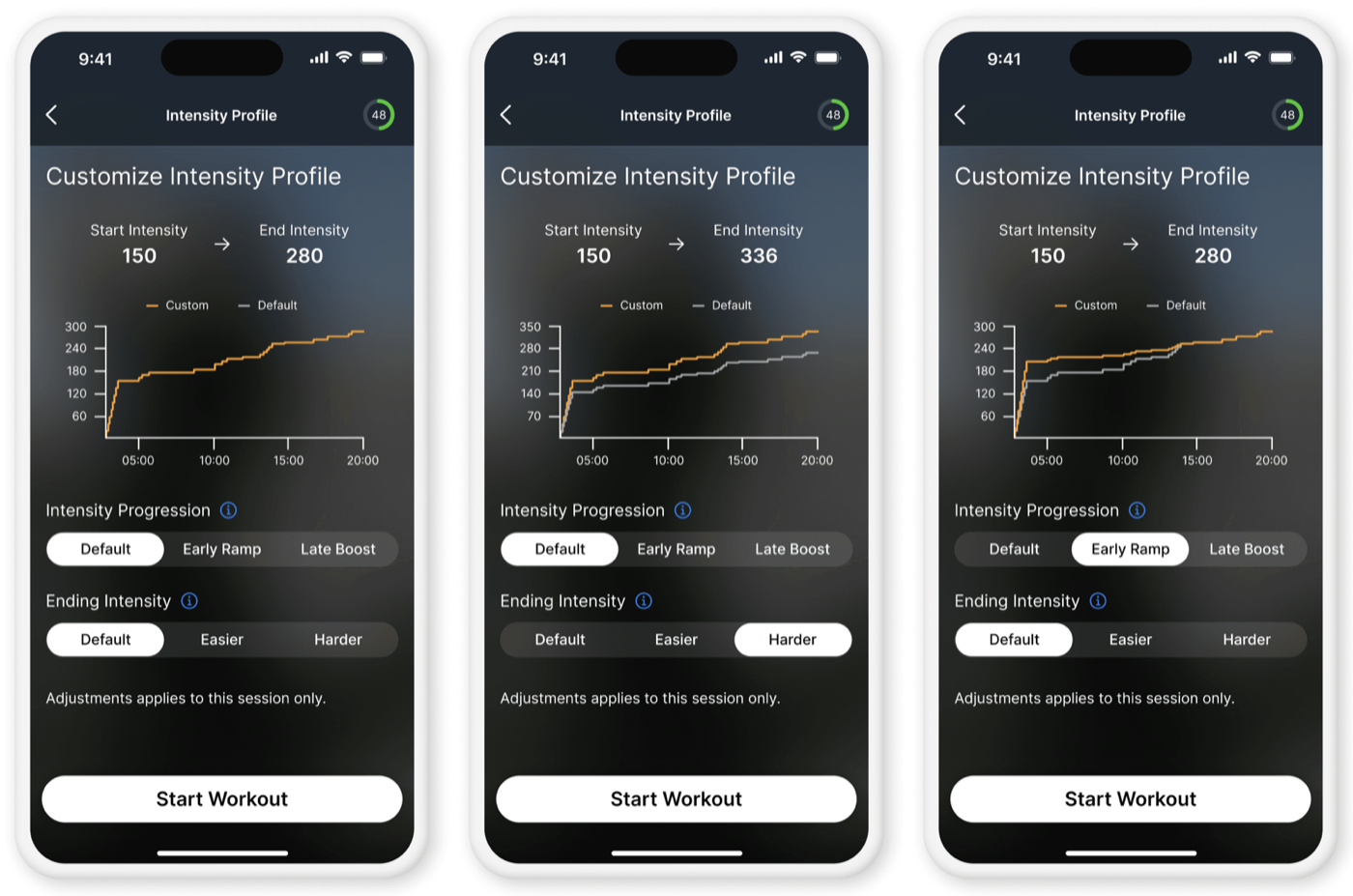
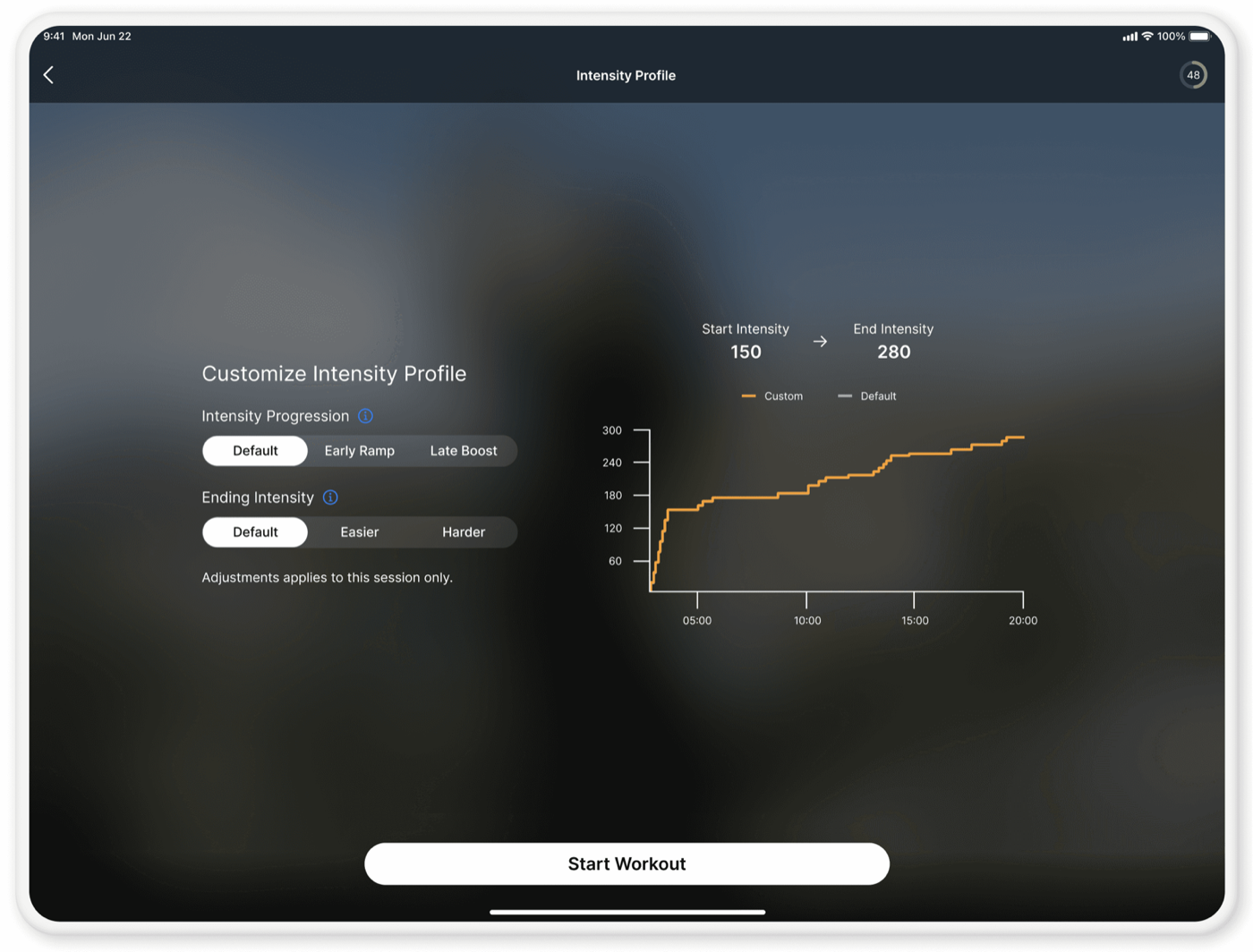
▪Added a step to choose one of three profiles: Standard, Early Ramp-Up, Late Boost
▪Added Easy Mode and Hard Mode for single-session end-intensity tweaks without changing the default user profile
▪Reduced need for manual mid-session changes
2. Smooth Intensity Ramp-Up
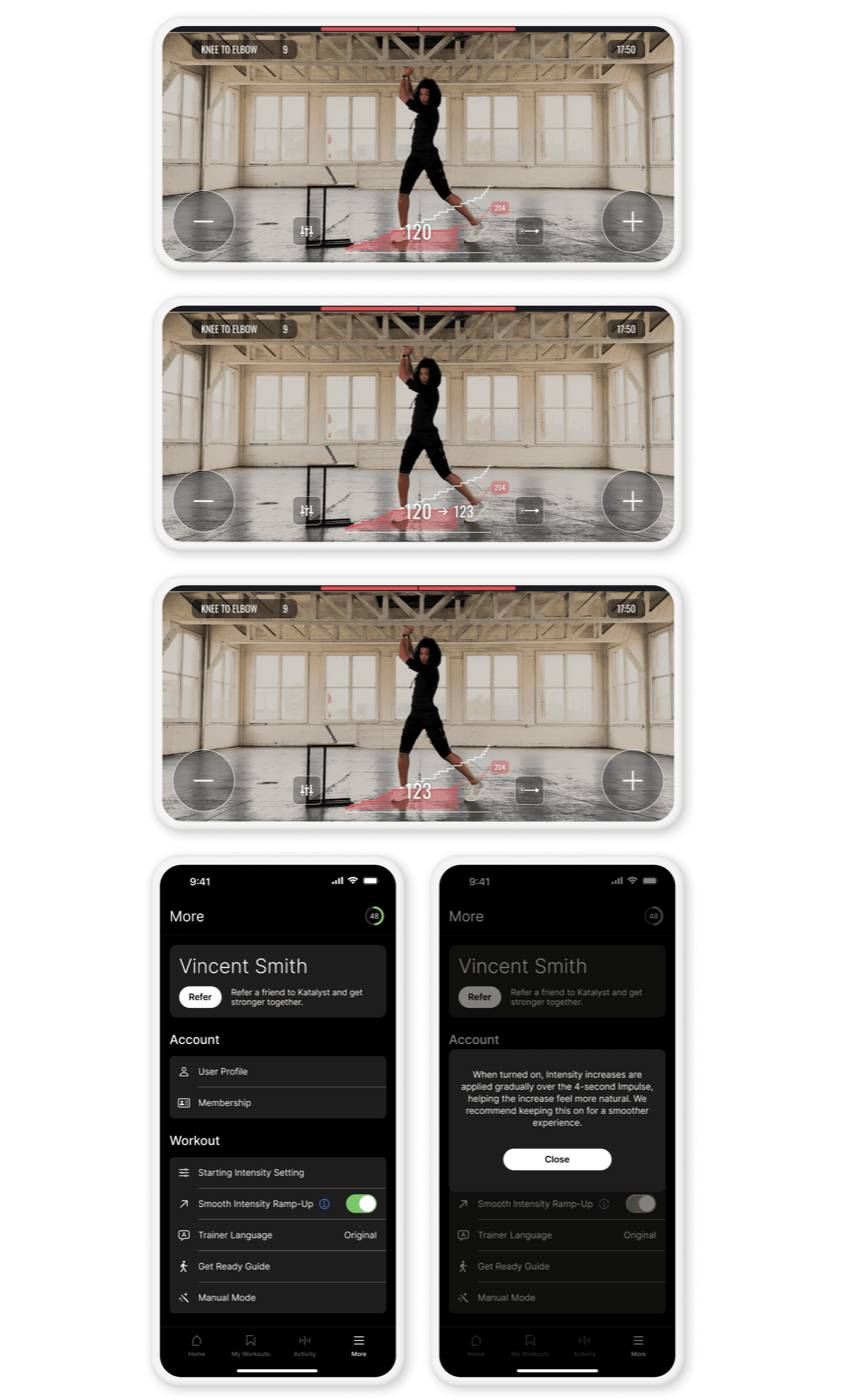
▪Displayed target intensity next to the current value when an adjustment occurred (either by the trainer or the user)
▪Applied changes over the next 4-second impulse instead of instantly, creating a smoother, safer shift
07
Results & impact
▪28% decrease in mid-workout adjustments
▪85% positive feedback on smoother, more predictable changes
▪Qualitative feedback: users felt “in control” and “safer”
▪Supported retention goals by boosting trust in solo training, a key driver for long-term subscriptions
▪Increased user confidence, reduced drop-offs, and improved adoption of customized intensity settings
08
Collaboration
▪Engineering: Designed logic for gradual adjustments within firmware limits
▪Creative Director: Ensured visuals aligned with Katalyst’s premium, approachable brand
▪Trainers: Defined optimal progression patterns for different workout types
09
Reflection
Control equals confidence, and in at-home EMS training, confidence drives consistency. By giving users transparent, safe, and customizable control, we strengthened trust in solo sessions and positioned Katalyst as a professional-grade home training platform, critical for scaling beyond studios and sustaining subscription growth.
If extended, I’d explore adaptive intensity algorithms that auto-adjust using heart rate and performance data.